Welcome to the United States K-9 Academy
& Police Dog Training Center

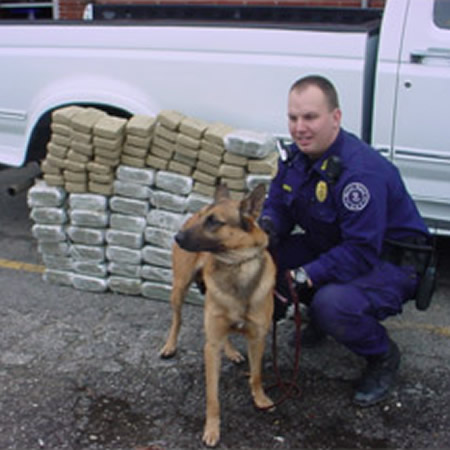
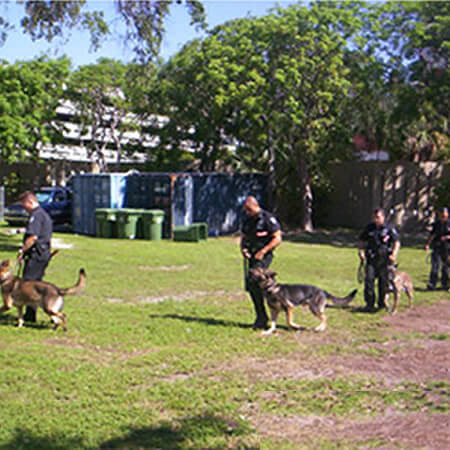
US K-9 Academy & Police Dog Training Center is a Miami-based, award winning internationally recognized institution, specializing in the field of Canine Training, sales and services. US K-9 Academy provides the most modern dog training technology to hundreds of local, state and federal law enforcement agencies throughout the country and abroad.

US K-9 Academy also has a well-balanced training program for civilians looking for a career in canine training.

US K-9 Academy is a Florida International University --IFRI-NFSTC certified school for detector dogs.

Our facility is located within minutes from Miami International Airport and is operated by courteous and professional staff that understand the needs of our students as well as their canines.
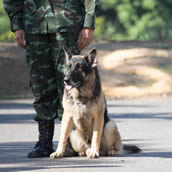
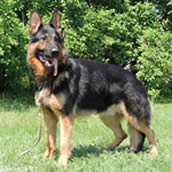
Our training directors have over 20 years experience in the field of Canine Training, and have received recognition from numerous police agencies, both domestically and abroad.

Our instructors include Certified Police Canine Team Training Instructors who achieve established and maintained canine units for many agencies throughout the world.

Our mission statement is simply 100% Satisfaction Guaranteed.

US K-9 also offers full training courses from Pointers to Retrievers, call for details.

MEMBERS OF:

IABTI-International Association of Bomb Technicians and Investigators

INEOA-International Narcotics Officers Association

NORTHEAST ARKANSAS NARCO-TERRORISMS TASK FORCE

Services Offered
  • Certified Trainer Courses
  • Detector Dog Services
  • Dog Training
  • Dogs for sale
Police Dog Training Session


Dog Training Miami

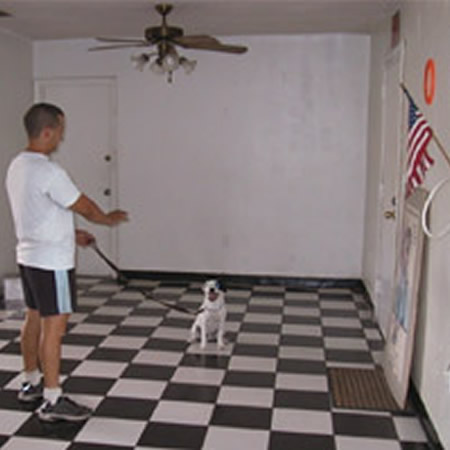
Dog training is the process of teaching a dog to perform behaviors in response to certain commands. The most common behaviors are "sit", "lie down", and teaching the dog to relieve it outside. The most effective way to train a dog involves using treats and positive reinforcement. In addition, many trainers use a clicker.

There are many methods of dog training and many objectives, from basic obedience training to specialized areas including law enforcement, military, search and rescue, hunting, working with livestock, assistance to people with disabilities, entertainment, dog sports and protecting people or property.

Dog Training Miami

As pack animals, wild dogs have natural instincts that favor cooperation with their fellow dogs. Many domestic dogs, either through instinct or breeding, can correctly interpret or respond to signals given by a human handler.

Most dogs live with people who want them to behave in ways that make them pleasant to be around, keep them safe, and provides for the safety of other humans and pets. Dogs do not figure out basic obedience on their own. The fundamental rule that must be remembered is that one should never apply human standards of society onto the dog with the assumption that the dog will understand.

The hardest part of training is communicating with the dog in a humane way that the dog understands. However, the underlying principle of all communication is simple: reward desired behavior while ignoring or correcting undesired behavior.

Dog Training Miami

Basic pet obedience training usually consists of six behaviors:

  • Sit
  • Down
  • Stay
  • Recall ("come", "here" or "in")
  • Close (or loose-leash walking)
  • Heel

"Corrections" are not punishment, but feedback to the dog it has made an incorrect choice in the behavior it has given the handler. Corrections can be physical i.e. leash correction or mental i.e. withdrawing a reward. There have been wide swings lately on negative and positive training, but most skilled trainers use both. The dog's personality, the behavior and the importance of the correct behavior should all be taken into account in using corrections with your dog. In a nutshell negative corrections should only be used to eliminate a behavior and positive rewards to repeat a behavior.

The prenatal period is a recently recognized developmental period of puppies. It is thought that "long-term effects on behavioral development may also be produced in some mammals by events occurring in utero”.   Previous studies tended to overlook the existence of this period, since the puppy’s behavior could not be observed. With the development of the ultrasound machine, a puppy can now be observed within the mother as early as the fourth week of gestation.


Dog Training Miami

It was found that puppy fetuses would react to touch and/or pressure from the outside of the mother’s abdomen. In addition, it is theorized that since puppies have such a well-developed sense of touch at birth, the sense of touch would also be well-developed before birth. Studies have found that "when a pregnant animal is petted her litter is more docile", According to while in utero have a higher tolerance for touching than puppies that receive no contact at all. One could theorize that gentle petting of the mother’s abdomen could help to facilitate positive, beneficial puppy socialization with people.

During the first four weeks of a puppy's life, also known as the neonate period, puppies can learn simple associations.  However, early experience events are unlikely to carry over into later periods. Studies indicate that puppies in the neonate period do not seem to learn by experience.  It is theorized that this is due to the fact that the puppy’s brain, sense, and motor organs are still undeveloped. Based on its limited capacity to sense and learn it would be difficult to affect the puppy psychologically, either in a positive or negative sense.


Dog Training Miami

The next period of development is known as the socialization period. This period begins around 3 weeks old and ends around 12 weeks old.   The main aspect of this period is social play. Social investigation, playful fighting and playful sexual behavior is very important to developing social relationships during its life.  New behavior patterns are directly influenced by the puppy’s interaction with its mother and other puppies in the litter.

During this period puppies develop social relationships, with other puppies as well as with people. However, there is a point at which the puppies can develop a fear of strangers. At 3–5 weeks of age, puppies will actively approach strangers. Shortly thereafter stranger avoidance begins and slowly escalates until it peaks around 12–14 weeks of age. While this natural fear of strangers could serve as a way to keep a curious puppy away from predators, it can also hinder normal relationships with people.

Dog Training Miami

During this period, startle reactions to sudden movement and sounds develop. This serves to help the puppy learn to differentiate between dangerous and safe or insignificant events. During the socialization period, the development of attachment to certain locations occurs. This is displayed by an extreme disturbance in the puppy whenever a change in location occurs. This is known as localization. Localization often peaks in puppies between 6–7 weeks old, and then tapers off after that time until a change in location is no longer distressing to the puppy.

Dogs that are handled and petted by humans regularly during the first eight weeks of life are generally much more amenable to being trained and living in human households. Ideally, puppies should be placed in their permanent homes between about 8 and 10 weeks of age. In some places it is against the law to take puppies away from their mothers before the age of 8 weeks. Puppies are innately more fearful of new things during the period from 10 to 12 weeks, which makes it harder for them to adapt to a new home.


Dog Training Miami

Puppies can begin learning tricks and commands as early as 8 weeks of age; the only limitations are stamina, concentration and physical coordination.  Between three to six months of age, a puppy begins to get its adult teeth, with all adult teeth in by six months. This period can be quite painful and many owners do not recognize the natural need to chew. By providing specific chew toys designed to ease the pain of teething (such as a frozen nylon bone), attention can be diverted from table legs and other furniture. It may be helpful to avoid providing chewing objects that mimick other non-appropriate chewing objects; for example, do not allow the puppy to chew on stuffed, plush toys early on so they do not learn that it is appropriate to chew on any fabric or stuffed material (rugs, couches). Many people also use a bad-tasting, bad-smelling spray on favorite items, such as shoes, furniture, or even wallpaper, to discourage chewing. Bitter apple is a commonly used spray, however is alcohol based so must be re-applied at least every 24 hours. There are also several commercial sprays available. Different sprays work better for different applications, owners, or puppies.

Professional dog trainers, train the dog's owner to train his or her dog. To be most effective, the owner must use and reinforce the techniques taught to the dog. Owners and dogs who attend class together have an opportunity to learn more about each other and how to work together under a trainer's guidance. Training is most effective if all those who handle the dog take part in the training to ensure consistent commands, methods, and enforcement. Classes also help socialize a dog to other people and dogs. Training classes are offered by many kennels, pet stores, and independent trainers.


Dog Training Miami

Group classes may not be available until the puppy has completed all of its vaccinations around 3 – 4 months of age; however, some trainers offer puppy socialization classes in which puppies can enroll immediately after being placed in their permanent homes as long as disease risk is minimal and puppies have received initial vaccinations. In most cases, basic training classes accept only puppies that are at least 3 to 6 months old however it's recommended to start training as soon as the puppy comes into your home. Puppies may also be trained individually by the trainer visiting the dog's home beginning as early as 8 weeks.
A puppy requires discipline, consistency, and the patience of its owner. The puppy training phase is integral in raising a healthy and happy dog and keeping a safe and fun home environment.

Dogs are expressive and may communicate needs by biting, whining, and getting fidgety. Changing one's own conduct may be effective in changing a puppy's behavior.

Dog Training Miami

House training is an important issue for puppies. Various methods of house training will work although the key is to be consistent. With regularly enforced rules, litter box, crate, or paper training can be successful.

Posture Facilitated Relaxation (PFR) may be an effective technique to establish a bond between handler and puppy. The handler puts the puppy no older than 4–6 months in a down position and then holds the dog in that position by exerting only enough force to maintain the position. Once the puppy stops struggling and relaxes, the handler massages the puppy's neck and back.

Fundamentally, dog training is about communication. From the human perspective, the handler is communicating to the dog what behaviors are correct, desired, or preferred in what circumstances and what behaviors are undesirable.


Dog Training Miami

A handler must understand communication from the dog. The dog can signal that he is unsure, confused, nervous, happy, excited, and so on. The emotional state of the dog is an important consideration in directing the training, as a dog that is stressed or distracted will not learn efficiently.
Using consistent signals or words for these messages enables the dog to understand them more quickly.

It is important to note that the dog's reward is not the same as the reward marker. The reward marker is a signal that tells the dog that he has earned the reward. Rewards can be praise, treats, play, or anything that the dog finds rewarding. Failure to reward after the reward marker diminishes the value of the reward marker and makes training more difficult.


Dog Training Miami

The meanings of the four signals are taught to the dog through repetition, so that he may form an association by classical conditioning so that the dog associates the punishment marker with the punishment itself. These messages may be communicated verbally or with nonverbal signals. Mechanical clickers are frequently used as a reward marker, as are the words "yes!" or "good!". The word "no!" is a common punishment marker. "Whoops!" is a common NRM. A KGS is commonly a repeated syllable (such as "g-g-g-g-g" or a drawn out word such as "gooooood".)

Hand signals and body language also play an important part in learning for dogs. Some sources contend that the most effective marker is the human voice.
Dogs do not generalize commands easily. A command which may work indoors might be confusing out-of-doors or in a different situation. The command will need to be re-taught in each new situation. This is sometimes called "cross-contextualization," meaning the dog has to apply what's been learned to many different contexts.


Dog Training Miami

Most training revolves around establishing consequences for the dog’s behavior. Operant conditioning defines these following four types of consequences.

  1. Positive reinforcement adds something to the situation to increase the chance of the behavior being exhibited again.
  2. Negative reinforcement removes something from the situation to increase the chance of the behavior being exhibited again.
  3. Positive punishment adds something to the situation to decrease the chance of the behavior being exhibited again.
  4. Negative punishment removes something from the situation to decrease the chance of the behavior being exhibited again.

Most trainers claim that they use "positive training methods ". Generally, this means using reward-based training to increase good behavior rather than physical punishment to decrease bad behavior.


Dog Training Miami

Dogs should not be punished by being placed within a cage, crate or carrier, especially one similar to where they eat or sleep. While this may confine the dog from further disruptive behavior, and also may seem similar to "sending a child to their room" as a form of punishment, the dog's mind will unfortunately begin to associate the cage with punishment, and will experience anxiety if put into the container, as a result of the negative feelings associated with it. Punishment involving confinement is an unusual and confusing type of situation for a dog, and should not be used for proper punishment.

Positive reinforcements can be anything that the dog finds rewarding - special food treats, the chance to play with a tug toy, social interaction with other dogs, or the owner's attention. The more rewarding a dog finds a particular reinforce, the more work he will be prepared to do in order to obtain the reinforce. Just being happy about a dog's accomplishment is a reward to them.


Dog Training Miami

Some dog trainers for example suggest using treats that are particularly favored by your pooch. Your dog or puppy may particularly enjoy liver treats or cheese. However, always make sure that the treat that you use as a positive reinforce is healthy and will not damage your dog or puppy's overall health.

Some trainers go through a process of teaching a puppy to strongly desire a particular toy, in order to make the toy a more powerful positive reinforce for good behavior. This process is called "building prey drive", and is commonly used in the training of Narcotics Detection and Police Service dogs. The goal is to produce a dog who will work independently for long periods of time, in the hopes of earning access to its special toy reward.


Dog Training Miami

Correction are only effective when paired with teaching the dog desired behaviors, but tend to be ineffective without teaching the dog the proper ways to avoid the correction and achieve reward. Corrections should only be administered as appropriate for the dog's personality, age, experience and physical and emotional condition. Some dogs may show signs of fear or anxiety with harsh verbal corrections. Other dogs may ignore a verbal reprimand. Some dogs develop an aversion or fear of water, when water is sprayed at them as an aversive.

Due to their natural social structure — which is territorial and protective of companions —companion animals may exhibit some form of alert behaviors toward intruders. However guard dogs and police dogs are not simultaneously intended to be companion animals.


Dog Training Miami

Guard dogs are defined as canines who either by training, or by instinct, protect either property, persons or objects. A well-trained guard dog protects person, property or objects on command and "turns-off" on command as well.

Several methods to train guard animals include the western (e.g. Koehler Method, developed by William Koehler, a military dog trainer and animal trainer for Walt Disney productions) and eastern methods. The Schutzhund sport also includes a protection phase in which the dog bites a padded sleeve worn by a "decoy" who plays the role of a "bad guy" threatening the dog's handler; the dog must also release on command and guard the decoy.


Dog Training Miami

In some circumstances, when dogs are left alone to guard property it may be necessary to train them to not eat treats or other food items offered by unknown persons

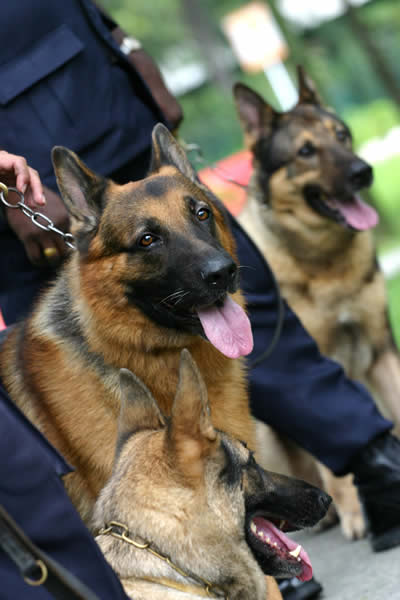
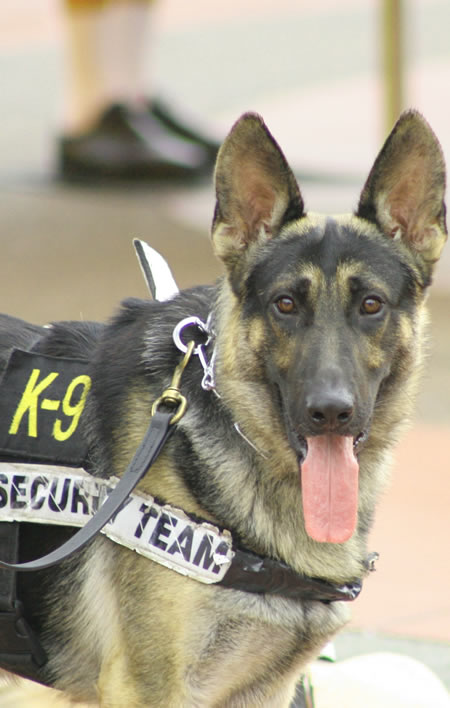
A police dog is a dog that is trained specifically to assist police and other law-enforcement personnel in their work. Police dogs are often referred to as "K9s", which is a homophone of canine. One commonly used breed is the German shepherd, although now Belgian Millions are popular K9s to use. In many jurisdictions the intentional injuring or killing of a police dog is a felony, subjecting the perpetrator to harsher penalties than those in the statutes embodied in local animal cruelty laws, just as an assault on a human police officer is often a more serious offense than the same assault on a non-officer. A growing number of law-enforcement organizations outfit dogs with ballistic vests, and some even go so far as to make the dogs sworn officers, with their own police badges and IDs.  Furthermore, a police dog killed in the line of duty is often given a full police funeral.


Dog Training Miami

Roles police dogs fill include:

  • Public order enforcement dog - The traditional image of a police dog is one used to enforce public order by chasing and holding suspects, or detaining suspects by the threat of being released, either by direct apprehension or a method known as Bark and Hold. German Shepherd Dogs and Belgian Malinois are most commonly used because of their availability however other dog breeds have also contributed, such as Dutch Shepherds, Rottweiler’s, Boxers, Doberman Pinschers, Giant Schnauzers, American Pit Bull Terriers, and American Staffordshire Terriers.
  • Search and rescue dog (SAR) - This dog is used to locate suspects or find missing persons or objects. Bloodhounds are often used for this task.
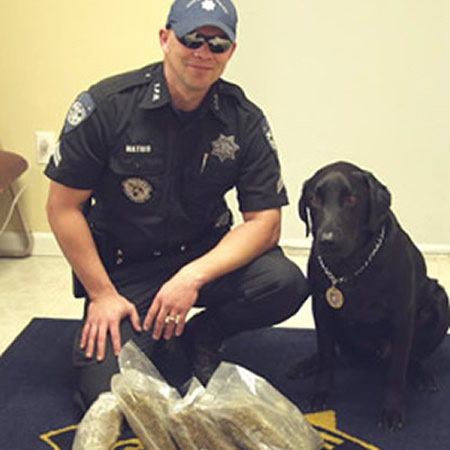
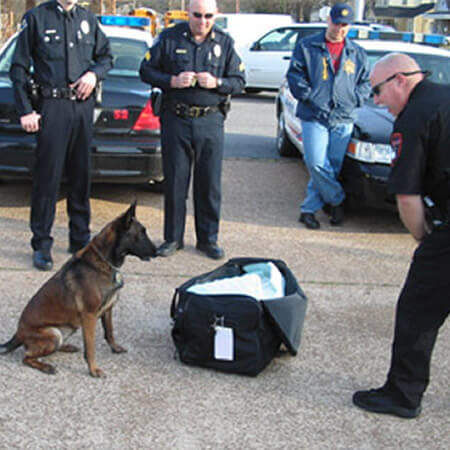
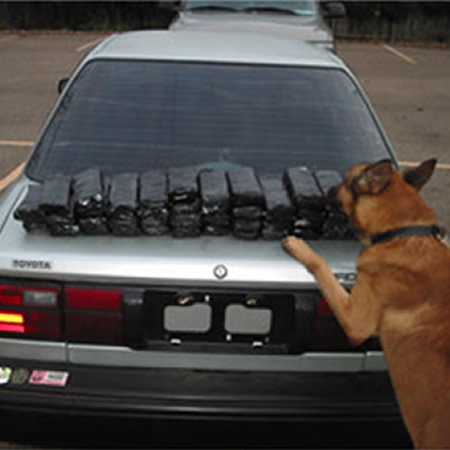
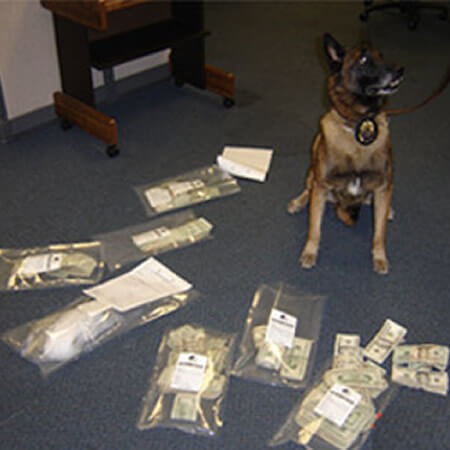
  • Detection dog or explosive-sniffing dog - Some dogs are used to detect illicit substances such as drugs or explosives which may be carried on a person in their effects. In many countries, Beagles are used in airports to sniff the baggage for items that are not permitted; due to their friendly nature and appearance, the Beagle does not worry most passengers. Some dogs also are naturally able to sniff out propane leaks and may be used in the future. The Bevier des Flanders is one breed that is able to do this. One pet Bevier sniffed out a propane leak in the owner's grill.
  • Cadaver dogs - Some dogs are trained in detecting the odor of decomposing bodies. Dogs' noses are so sensitive that they are even capable of detecting bodies that are under running water.   Pioneering work was done by Dr. Debra Komar (University of Alberta) in Association with the RCMP Civilian Search Dog Association in this area. The result was the development of training techniques that resulted in near 100% accuracy rates. Her research has been published in the Journal of Forensic Anthropology.

The most popular dogs that are use are the

  • Argentine Dogo (protect the officer, attack dog, sniff out bombs, sniff out drugs, sniff out food)
  • German Shepherd (protect the officer, attack dog, ground based tracking and air based tracking, locating human remains, locating drugs, locating EODs, locating evidence)
  • Dutch Shepherd (protect the officer, attack dog)
  • Belgian Malinois (protect the officer, attack dog, locating EODs)
  • Boxer (protect the officer, attack dog)
  • Labrador Retriever (sniff out bombs, sniff out drugs)
  • Doberman Pinscher (protect the officer, attack dog)
  • Springer Spaniel (sniff out bombs, sniff out drugs)
  • Bloodhound (Odor Specific ID, tracking, sniff out bombs, sniff out drugs, locating evidence)
  • Beagle (sniff out bombs, sniff out drugs, sniff out food)
  • Rottweiler (protect the officer, attack dog)
  • Giant Schnauzer (protect the officer, attack dog)

US k-9  content pages report  0905
Police dogs
The US K-9 academy is renowned world wide for its quality police dog training instructors and programs alike. With the finest and most professional instructors available anywhere in the world, the USK9 academy provides a challenging opportunity for police dog teams at any level of expertise. The Police K9 training Management program is breaking new ground and introducing new concepts in how police dogs are deployed in law enforcement. Our goal is to make K9 work in policing professional in such a manner that each of our jobs is safer through sound tactical dog training, and to bring all officers and administrators involved in K9 training work closer together to strengthen police dog training and deployment ethics and standards. Look for our upcoming courses for a program near you. For private group or specialized police or military oriented K9 courses and seminars. To learn more about police dogs click here
Thank you for your interest in US K-9 TRAINING. US k-9 has been in operation for a few years.  We provide excellence in police k-9 training, police dog sales and seminars.  US k-9 training uses ground breaking techniques and concepts in how dogs are deployed in law enforcement. Our goal is to make k-9 work in law enforcement both professional and safe for each k-9 team, through sound k-9 tactical training. We seek to bring all officers and administrators involved in k-9 work closer together to heighten k-9 work ethics and standards.
We work with many different federal agencies and law enforcement departments. If you are an agency setting up a new canine program or seeking  to add k-9 units to your existing program, US K-9 offers hand selected police dog candidates. We train in today’s top methods to ensure your agency only the finest work dogs available.  Our agency offers police k-9 training nationwide. Our training covers areas such as patrol, narcotics detection, explosives detection and arson detection, all based on a National Certification standard of your departments choosing (NAPWDA, AWDA or USPCA ect).  We recognize that your k-9 unit is important to you and therefore  offer a 100%  satisfaction policy. US K-9 academy is conveniently located. To learn more about police dogs click here

K9 training
As a K9 handler you are asked to step up when things heat up. Today’s K9 officer must be well educated and savvy; they face great demands to be skilled and tactically sound. At US K9 academy  we do not insult your intelligence, we ask you to put it to work. Small classes, hand selected dogs, and excellent instructors challenge you to the best of your abilities, both physically and mentally. Learning to be a top K9 officer involves using your mind to understand your dog, and the scenarios you will find yourself in on the street.
The days of old school training are over; the days of high tech training and tactical scenario based training are at hand. Technical, tactical training is the edge you get at US K9. At US K9 Academy you receive extensive in the field real-time scenario-based training. To learn more about K9 training click here
Canine training
From time to time the  Canine Association will have articles detailing training tips for you and your dog.  This is an article on basic obedience, teaching the dog to heel and sit at heel.  We hope this will help you get started and enjoy the time with your family member.
Many times police canine handlers hear, “Man, I wish my dog would do that” or “Hey, would you take my dog and teach him something”?  I know people laugh and joke about how well police canines mind their handlers, but the bottom line is the only difference between a police canine and the average family canine in the area of obedience is the amount of time officers spend with their canines. To learn more about Canine training click here
Obedience is the basic fundamental behavior all police canines must have.  Without obedience they won’t be able to do area searches, building searches, quite simply they will not work.  If the handler does not have control over the canine he/she is useless.  Police canine handlers put many hours of obedience training in with their canines before they get certified to work the streets.  Teaching a canine obedience is done in a series of steps.  The first step is the handler must be willing to take time everyday or at least every other day to work with their canine in obedience.  Handlers must be consistent in the behaviors they are trying to teach the canine and the way they are teaching the canine.
There are a couple of terms used in training canines such as signal, pressure praise or compulsion and avoidance. I’m sure there are more; however, they pretty much have the same meaning.  Canines will automatically migrate to positive re-enforcement and avoid negative pressure.  How this translates to teaching a canine obedience is when you are attempting to teach a canine a behavior you have to be patient, precise, consistent and intelligent in what you are attempting to accomplish. When you tell your canine to heel that is a signal.  When the canine does not start walking at the heel you give a leash correction that is compulsion.  Whenever you give a correction and the canine completes the behavior you are looking for you need to give praise.  Most canines will try to avoid compulsion and if they understand what you are asking them to do they will eagerly and willingly do it. To learn more about Canine training click here

Dogs For Sale
Browse hundreds of dogs for sale! Finding a puppy for your family has never been easier. Browse our dogs for sale classifieds below. If you do not find the dog for sale you are looking for then place a dog wanted ad so dog breeders may contact you when a certain dog breed becomes available. Feature your puppies for sale ad today and have your ad listed below. Browse hundreds of pages of puppies for sale by clicking on the page numbers. If you have not yet decided upon a particular dog breed then please view our Dog Breeds section. Using it will enable you to sort through a range of dog breeds which best matches your criteria. If you do not find the dog for sale that you are looking for then place your request within our dogs wanted section. To learn more about Dogs for sale click here

Dog trainers
The US k9 academy offers individual pet dog trainers a respected and concerted voice in the dog world. We continue to promote professional dog trainers to the veterinary profession and to increase public awareness of dog friendly training techniques. To learn more about Dog training  or Dog trainers click

Guard dog training
What defines a pet beagle from a smelly dog in the alley is how it acts around people. Dogs without training, mostly street dogs are very elusive. Sometimes they can be very aggressive for no reason.
A protection dog is good to have around. Many people often confuse a protection dog and a guard dog as one and the same, but really they are two very different things.
During a break in, you'd want your dog, a guard dog, to be anything but silent or obedient. This is why you adopted the dog in the first place: to watch over the house at night or during the times when you're off on a vacation or a trip. Simply put, you need the right guard dog training, if you want to be able to count on your guard dog to do its job.
It's true when they say that not all dogs can be made into guard dogs. Sure, dogs are known for their steadfast loyalty to their owners, which is why people call them man's best friend, but there's no denying some dog breeds are better at being guard dogs than others. To learn more about guard dogs click here

US K9 Academy comprehensive ENERGY CENTERED TRAINING dog trainer curriculum only certifies those dog trainers that have successfully passed my rigorous 3-year, experience- based dog training course. Although my dog trainer program is the most complete, hands-on, and effective dog training program on the market, I often advise my students to not even mention their certification. I tell them to "simply show skillful knowledge” and demonstrate how they can help the dog and client relationship flourish. So, if a prospective dog trainer boasts about his/her certification as a dog trainer, there needs to be a few more questions asked. 
Clients should be sure to call or visit those references and perform a basic online search of this person and their company by simply typing their name and company name into Google or other popular search engines. Furthermore, owners should pay close attention to the interaction between the dog trainer and the dog - this will tell an owner a lot. If the dog trainer uses clickers, gentle leaders, retractable leads, or treats to train, they are likely NOT an authentic and experienced dog trainer - just one that has read books, seen videos, or taken online courses. For more information contact the US K9 Academy. To learn more about dog training click here

Trained Canines
US K9 Academy Trains Police Dogs For: Narcotics Detection, Security Patrol, Explosives Detection, Arson Investigation and Personal Protection. We train dogs for law enforcement agencies, corporate security, interdiction enterprises and the private sector. To learn more about Trained Canines click here

Dog Handler Courses
For police officers, we also offer a US K9 police dog handler program for law enforcement personnel. We train you in the proper handling and how to work effectively with your dogs. Our training programs are customized for each department's needs. US K9 Academy Handler Training is unrivaled in the industry as one of the most detailed and comprehensive Canine (Dog) Handler Training Schools in the USA. To learn more about Dog Handler courses click here

Dog Trainer Courses
We offer an individual K9 Trainers Program. This state-of-the-art Training will be supervised by canine consultant who is currently a consultant for various Government Agencies & Police Departments Nationwide. This Program of Instruction will be covered in the Classroom as well as Practical Application in the field. The course will require 600 Hours being a 13 week program. To learn more about Dog Trainer courses click here